

Challenging Conventional Wisdom
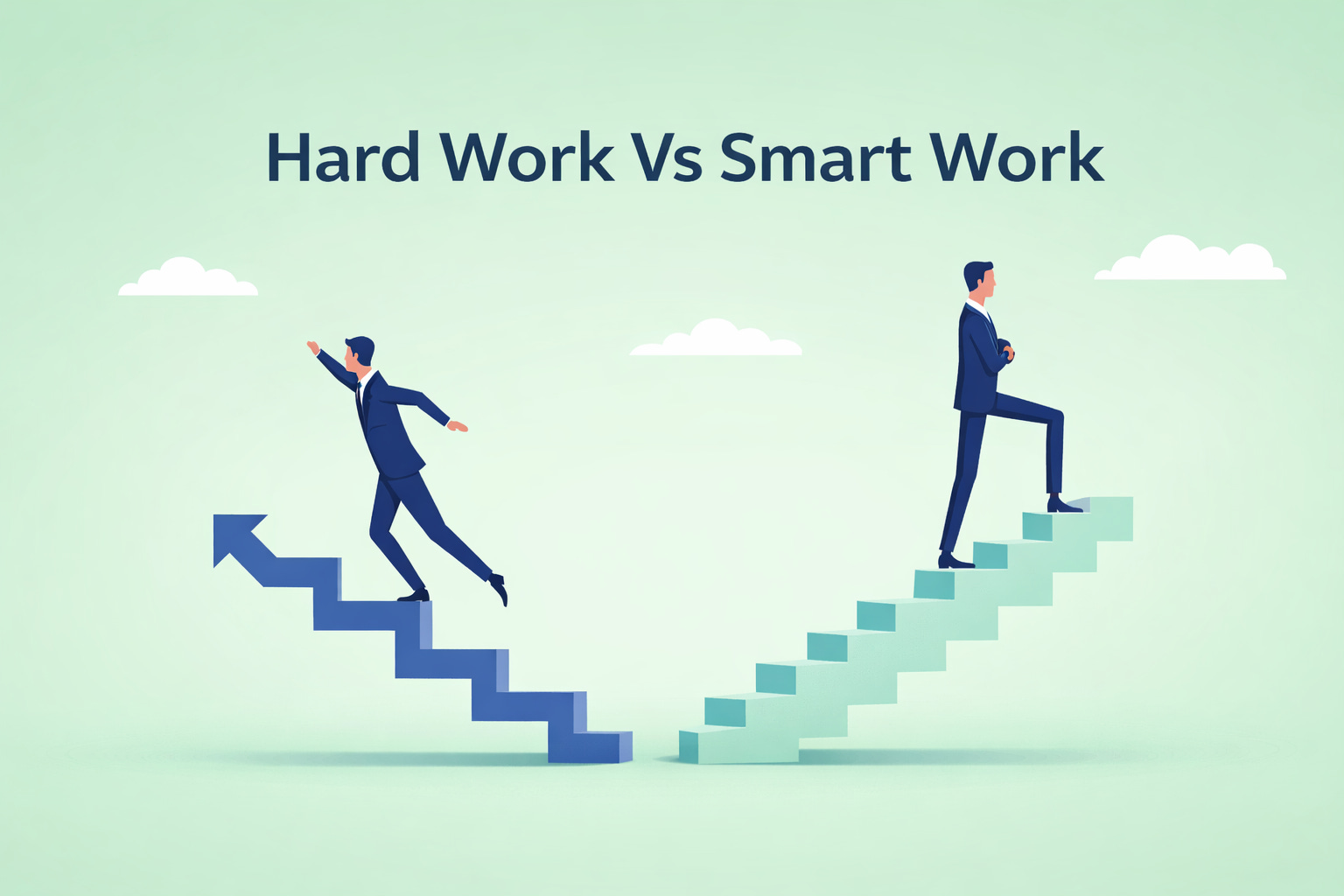
Why is “hard work” slowly being replaced by “smart work”?

From childhood, most of us were taught that hard work is the surest path to success. Sayings like “hard work conquers all” ( Labor omnia vincit) shaped how we approached life, discipline, and achievement.
Fast forward a few decades, and the narrative has shifted. A new idea has taken center stage: work smart, not just hard.
In today’s professional world, the comparison between smart work and hard work is everywhere. Thought leaders and management experts often advocate this shift. But before accepting it at face value, it’s worth pausing to reflect.
Are we seeing a genuine evolution, or simply a challenge to long‑standing beliefs? Are we encouraging people to achieve more in less time, or are we trying to create processes that reduce the time required for repetitive work?
Supporters of smart work argue that with today’s tools, technology, and access to information, efficiency matters more than sheer effort. The ability to prioritize, leverage resources, and think strategically is often seen as more valuable than putting in long hours. When people say “do smart work, not hard work,” they’re not dismissing effort. They’re really saying: don’t just add more hours instead add more thought.
The Counterpoint :
For years, the importance of hard work was reinforced by our parents, teachers, and society. That message was consistent and deeply ingrained. So what changed as we grew older? Has hard work become less relevant, or have the conditions around us shifted to demand a different approach?
In some cultures, a donkey is often used as a symbol of hard work, but mainly in the sense of repetitive effort without much thought. This creates a contradiction that if hard work has always been considered a virtue, why is it sometimes viewed negatively when it’s associated with routine, unthinking labor?
Maybe the real question isn’t about choosing one over the other. It’s about understanding how both ideas fit together in a changing world.
The Real Truth:
It’s not Smart Work vs. Hard Work , infact the best performers does both
Hard work builds discipline and consistency
Smart work provides direction and efficiency
Without hard work, nothing gets done. Without smart work, effort gets wasted.
On a lighter note
If you still think hard work is synonymous with being a donkey, the reality is actually the opposite. Donkeys are known for consistency, resilience, and endurance , all without drama. In many ways, that’s much closer to smart work than people give it credit for.
Hello I write gentle reflections on slowing down, faith, and living with more wisdom than urgency.
Still learning as I go, but grateful to be here and to connect. If you have a moment, I’d love to invite you to explore my page — and if something resonates, you’re always welcome to share your thoughts.
https://substack.com/@thinkslowerstudio/note/c-234479139?r=7al1vn&utm_source=notes-share-action&utm_medium=web
I’ve always considered ‘work smart, not hard’ in relation to work that is laborious that could be optimised in some way. And it would make sense in this context. It wouldn’t be applicable to work that is inherently labour intensive, such as craftsmanship. Trying to outsmart this process is just cutting corners.